Academic Funding
University Federal Funding: Systematic Discovery Beats Hope
Your faculty missed a $500K NSF grant because you discovered it two weeks before the deadline. Another university saw it six months early. Here's how they did it.
The Grant That Got Away
Your computer science department had researchers working on exactly what this grant was funding. They would have been perfect applicants. The grant was for $500K over three years. Your university could have done the work.
But you discovered the grant on Grants.gov two weeks before the deadline. Your faculty member frantically tried to put together a proposal in 10 days. It was incomplete. You didn't submit.
Meanwhile, a researcher at another institution saw the same funding six months earlier when the agency posted a Funding Opportunity Announcement (FOA) on the Federal Register. They had six months to develop a compelling proposal. They won.
How Federal University Funding Actually Works
Most universities don't understand the funding timeline. They think federal grants appear on Grants.gov and you have 60 days to respond. That's half the story.
The complete timeline starts 6-9 months earlier. Here's how it actually works:
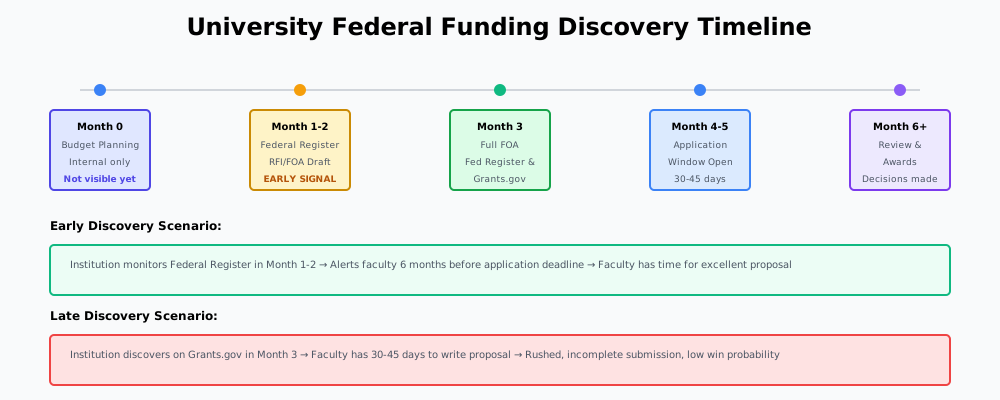
Figure 1: Federal funding timeline spans 6+ months. Early discovery on Federal Register creates 4-5 month advantage over late discovery on Grants.gov.
The Three Categories of University Federal Funding
University federal funding comes in three categories, each with different discovery windows:
Category 1: Investigator-Initiated Grants (Ongoing, rolling deadlines)
NSF, NIH, DoD, and other agencies accept proposals year-round. NSF SBIR program, NIH R01 grants, and similar. These have 2-3 month cycles. But if your faculty member doesn't know it exists, you miss them.
Discovery challenge: These exist but aren't announced loudly. You have to find them on individual agency websites. Most universities miss them because they're not monitoring.
Category 2: Program-Specific Funding Announcements (Announced 3-6 months early)
Agencies announce programs on the Federal Register 3-6 months before accepting applications. NSF research programs, NIH funding initiatives, DoE research grants. The FOA describes exactly what they're funding.
Discovery advantage: Institutions monitoring the Federal Register see these 3-6 months early. They have time for faculty to develop compelling proposals. Institutions discovering on Grants.gov days before deadline scramble.
Category 3: Institutional/Consortium Grants (Often not competitive)
Large collaborative grants where the agency approaches specific universities. IMPART awards, multi-institution initiatives, centers of excellence. These don't appear in broad announcements. You need to be in the agency's network.
Discovery challenge: You have to have relationships with federal program officers. They call your department and say "We're thinking about funding work in this space. Would you be interested?"
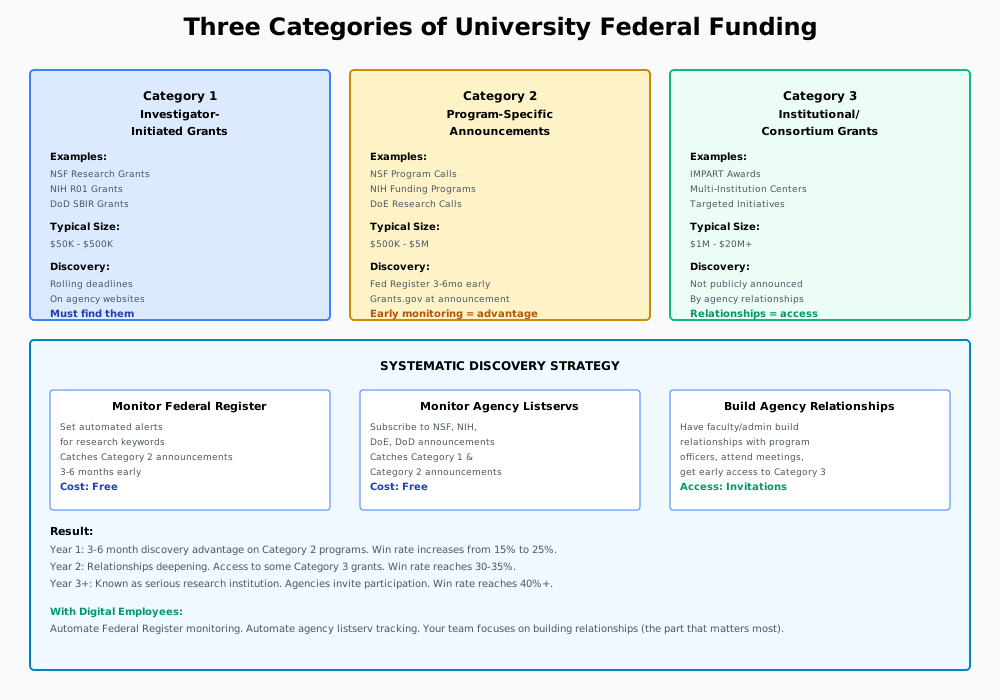
Figure 2: Three funding categories require three different discovery strategies. Most universities only see Category 2 discoveries, missing Categories 1 and 3.
Building Systematic University Funding Discovery
Universities that capture more federal funding than their peer institutions do three things systematically:
1. Monitor Federal Register Daily for Program Announcements
Set up automated alerts on the Federal Register for keywords matching your research strengths. When a new FOA appears, your research administrators get notified immediately. They flag it for relevant faculty.
Cost: Free (Federal Register alerts are free). Time: 10 minutes to set up. Benefit: 3-6 month lead on program announcements.
2. Subscribe to Agency Listservs and Notifications
NSF, NIH, DoE, DoD, NSF all have listservs announcing new funding. Subscribe. Have research administrators monitor them. When a new program appears, alert faculty in that area.
Cost: Free. Time: Managed by research office. Benefit: Continuous pipeline of funding opportunities.
3. Build Relationships With Program Officers
Assign faculty/administrators to build relationships with program officers at agencies funding your research areas. Regular contact. Briefings on emerging research priorities. When the agency is thinking about new funding, they call you.
Cost: Time investment from 1-2 senior people. Benefit: Access to institutional grants (Category 3) that aren't public.
The Compound Advantage Over Time
Universities that implement systematic discovery don't just win more grants in Year 1. They compound their advantage:
- Year 1: Discover more programs earlier. Win rate increases from 15% to 25%.
- Year 2: Faculty reputation grows from Year 1 wins. Relationships with agencies deepen. Win rate reaches 30-35%.
- Year 3+: Known as serious institution in your research areas. Agencies approach you for collaborative grants. Win rate reaches 40%+.
Digital Employees Speed Discovery
Building this system manually takes time. Your research office monitors Federal Register, subscribes to listservs, tracks opportunities. But they miss things because humans can't monitor continuously.
Digital employees can monitor federal sources 24/7 and alert your research office to new funding matching your profile. They handle the boring monitoring work. Your team handles the relationships.
The Decision: Systematic or Hopeful
Your faculty members are brilliant. But if they're only learning about opportunities two weeks before deadlines, they're operating on hope instead of strategy. Shift to systematic discovery. Monitor early. Build relationships. Let digital employees handle the continuous monitoring. Your federal funding will follow.
Build Your Funding Discovery System
Stop discovering funding two weeks before deadlines. Monitor Federal Register, agency announcements, and funding opportunities systematically. Digital employees handle continuous monitoring. Your team handles relationships.
Explore Capital Event IntelligenceContinuous monitoring of NSF, NIH, DoE, DoD funding announcements. 3-6 month early discovery. Faculty gets called before deadlines close.