GovCon Strategy
Reactive vs Proactive Contracting: How Federal Contractors Actually Win
Reactive contractors wait for RFPs to appear. Proactive contractors shape what gets RFP'd six months before it's public. Here's how you move from one to the other.
The Reactive Contractor's Year
Your GovCon firm waits for SAM.gov notifications. When an RFP matching your space appears, you jump. Fourteen days to proposal deadline. Your team drops everything. You submit at 11 PM the day before deadline. You win maybe 1 in 10 that you pursue.
Meanwhile, another contractor—the one who's been talking to this agency for months—already knows what they're RFP'ing. They've had 150 days to prepare. Their team knows the evaluation criteria before they're published. They've pre-positioned partnerships. They know the incumbent's strengths and weaknesses. They know exactly what to promise.
When you see the RFP, they see an opportunity they helped design. And that's why they win 8 out of 10. You're both responding to the same solicitation. But one of you shaped it before it existed. That's the difference between reactive and proactive GovCon strategy.
The Four Engines of Government Contracting Success
Proactive government contractors operate four engines simultaneously. Each one takes time to build but each generates competitive advantage:
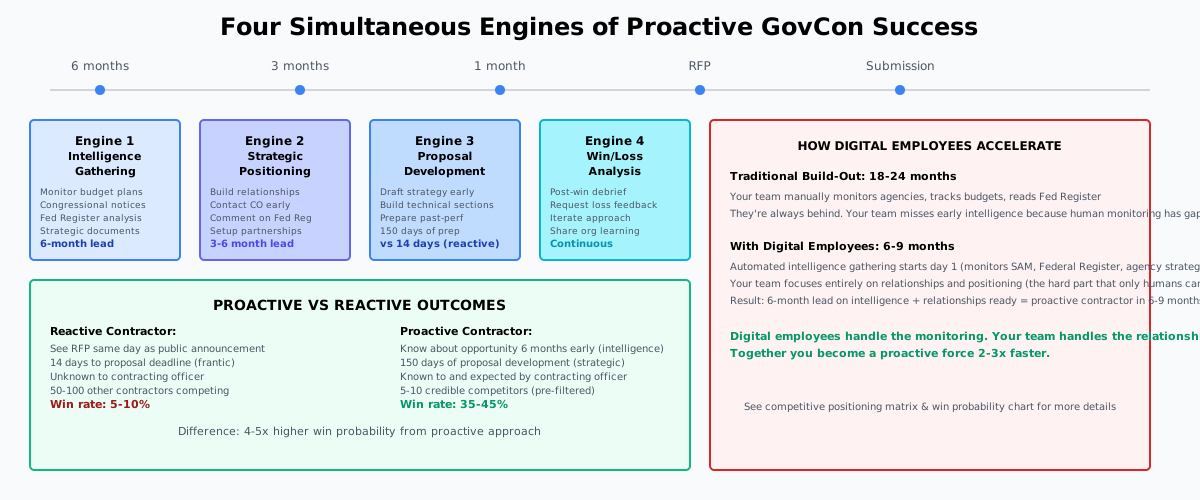
Figure 1: Proactive contractors operate four simultaneous engines. Intelligence gathers 6 months early. Positioning happens 3-6 months early. Development runs for 150 days instead of 14. Learning is continuous.
Engine 1: Intelligence Gathering (6-month lead)
You have someone (or digital employees) continuously monitoring agency budget plans, Congressional communications, Federal Register notices, and strategic documents from agencies you target. You know 6 months before public announcement what they're planning to buy.
This isn't insider information. It's all public. Most contractors just don't read it. You do. You know the agency is planning infrastructure modernization spending 6 months before they post a solicitation. That gives you 6 months to position.
Engine 2: Strategic Positioning (3-6 month lead)
Once you know what's coming, you start positioning. You reach out to the contracting officer. "We're aware you're considering modernization efforts. We've delivered similar projects. Would it be helpful to discuss our experience?" You attend a pre-bid conference (if there is one). You comment on the Federal Register notice when requirements are being drafted. You position subcontractors and partnerships.
By the time the RFP publishes, the contracting officer knows you. They know you're capable. They know your approach aligns with what they're trying to accomplish. You're not a surprise vendor showing up in the RFP response pile.
Engine 3: Proposal Development (150 days instead of 14)
Once you know the opportunity exists and have positioned, you have months to develop your proposal strategy. You don't wait for the RFP. You start drafting key sections. You're refining your technical approach. You're building your teaming strategy. You're preparing your past-performance narrative.
When the RFP finally publishes, you're 80% ready. You have 2 weeks to fill in the 20% that was unknown. Reactive contractors have 14 days to build from scratch. You have 14 days to polish something 80% complete. The quality difference is obvious.
Engine 4: Win/Loss Analysis (Continuous iteration)
After every win or loss, you systematically debrief. Why did you win? What worked in your positioning? What do you need to refine for next time? After losses, you request debriefs with contracting officers. You understand the competitive gaps. You improve.
This creates compounding improvement. Win 1 teaches you what works. You apply it to Win 2 and Win 3. Over time, your win rate climbs from 10% to 20% to 30%.
Why Proactive Beats Reactive: The Probability Math
The difference in win probability between reactive and proactive approaches is measurable:
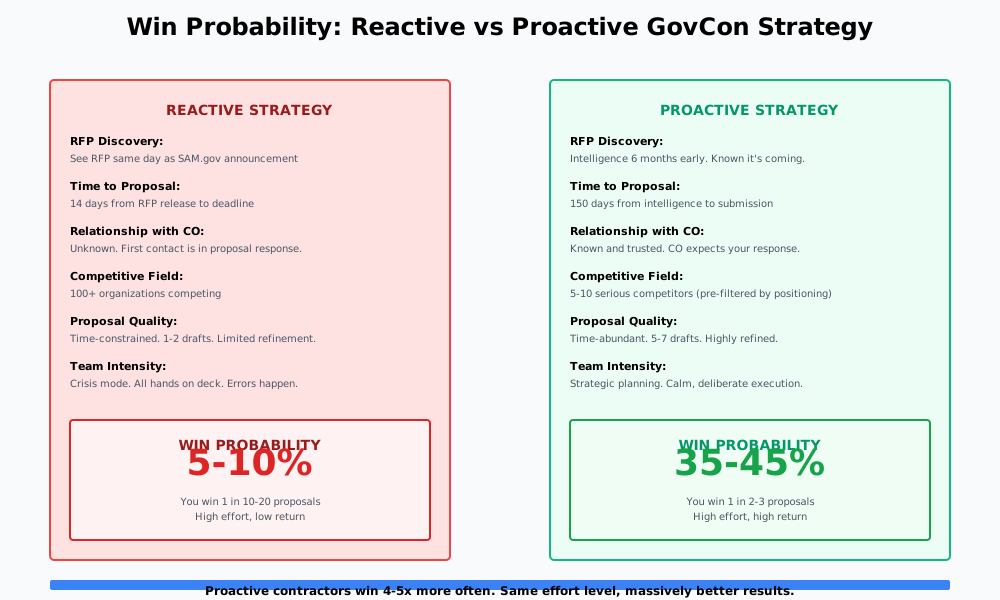
Figure 2: Proactive positioning increases win probability 4-5x. Intelligence gathering + 6 months of positioning = 35-45% win rate vs 5-10% for reactive responders.
Building the Proactive Machine: Timeline and Requirements
Transitioning from reactive to proactive requires four investments:
1. Intelligence Gathering System (0-3 months to build)
Deploy digital employees monitoring federal sources continuously: SAM.gov, Federal Register, agency budget documents, Congressional communications, strategic plans. This creates a 6-month lead on what's coming.
2. Relationship Infrastructure (6-18 months to build)
Assign people to build relationships with the agencies and contracting officers you target. This is not sales. It's genuine relationship-building: understanding their challenges, offering insights, becoming someone they trust and think of when opportunities emerge.
3. Proposal Development Capability (3-6 months to establish)
Build the ability to start drafting proposals 4-6 months before RFP release. This requires clear templates, pre-written sections, and teams that understand what success looks like before the specific RFP is published.
4. Win/Loss Learning System (Ongoing)
After every capture, systematically debrief and improve. Track what works. Share learning across the organization. Iterate continuously.
The Digital Employee Accelerator
Building a proactive GovCon machine normally takes 18-24 months. Digital employees cut that timeline dramatically by handling the intelligence gathering and opportunity monitoring work automatically.
Your team focuses on relationships and positioning. Digital employees handle continuous monitoring. Together, they create the foundation for proactive contracting within 6-9 months instead of 18-24.
The Multi-Year Compounding Advantage
Organizations that shift from reactive to proactive don't just win more contracts. They compound their advantage:
- Year 1: Build proactive infrastructure. Win rate climbs from 10% to 20%. Case studies accumulate.
- Year 2: Relationships deepen. Agencies think of you when planning. Win rate reaches 25-30%. Revenue accelerates.
- Year 3+: You're a known, trusted vendor in your space. Win rate reaches 40%+. Competitors can't catch up.
Organizations staying reactive stay stuck at 5-10% win rates forever. The gap compounds every year until reactive contractors have no chance competing against proactive ones in the same space.
Build Your Proactive GovCon Machine
Shift from waiting for RFPs to shaping what gets RFP'd. Digital employees handle intelligence gathering. Your team handles relationships. Together: proactive contracting wins.
Explore Capital Event Intelligence6+ month lead on what agencies are planning to buy. Intelligence gathering automated. Your team focuses on relationships.